
Lions Municipal
A short, tree-lined muni two miles from the Texas Capitol that happens to be a civil-rights landmark — the course where, in 1950, a Southern city quietly let Black golfers play. Austin has been fighting to save 'Muny' ever since.
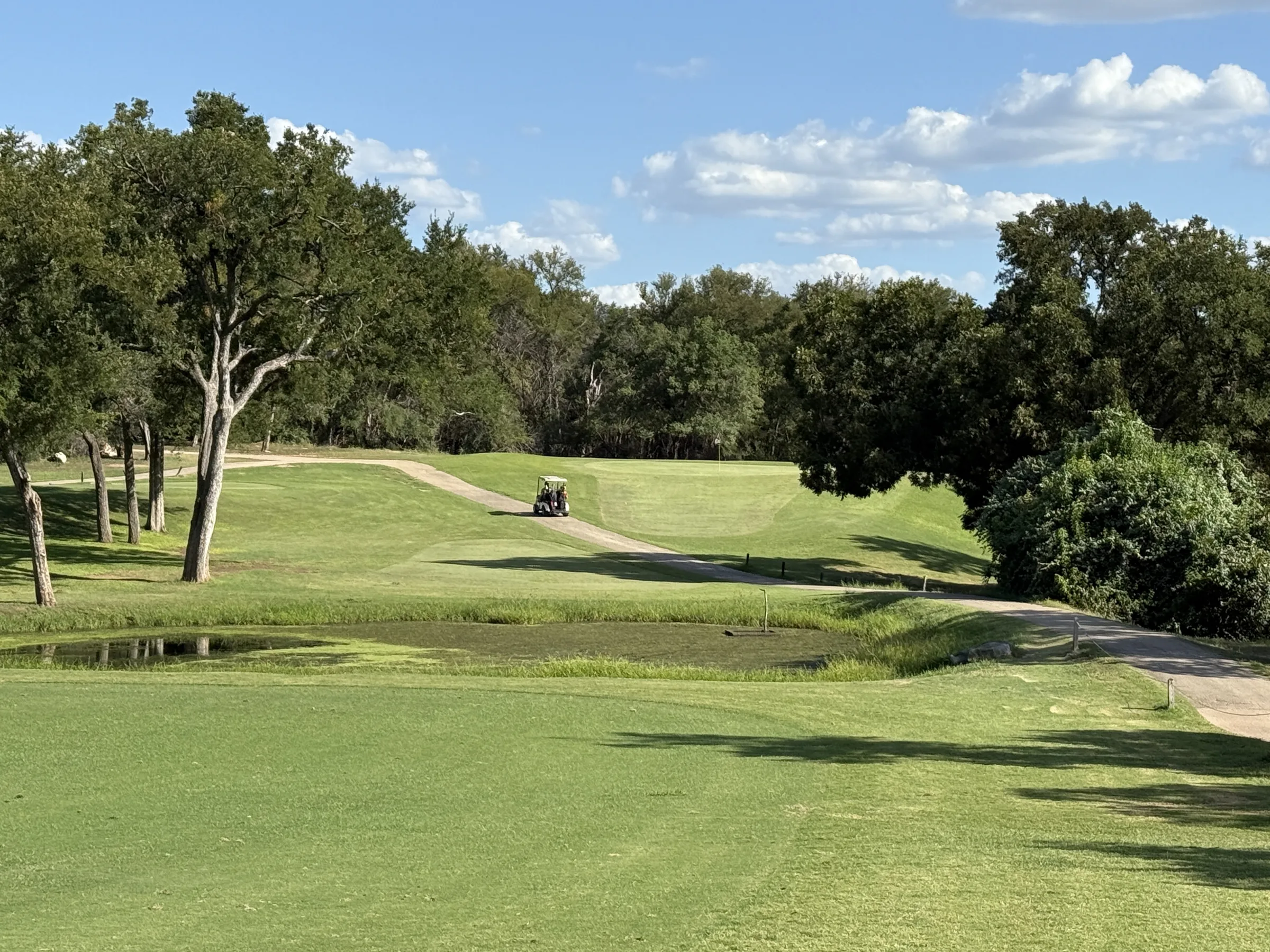
Two miles west of the Texas Capitol, tucked between Tarrytown’s live oaks and Lady Bird Lake, sits a short, unpretentious muni that most of the golf world overlooks and much of Austin would lie down in front of a bulldozer to protect. Lions Municipal — “Muny” — opened in 1924, and it is not on anybody’s list of great tests of golf. It is on something more important: the list of places where America quietly got a little bit better. In 1950, Muny became one of the first public courses in the South to let Black golfers play.
| Yards | Rating | Slope | |
|---|---|---|---|
| Tips | 6,001 | 69.2 | 114 |
| Regular | 5,642 | 67.3 | 110 |
How it plays
Honestly? Gently, if you drive it straight. At barely 6,000 yards from the Blue tees with a slope of 114, Muny won’t overpower anyone — this is a classic city parkland course that defends itself with mature trees, a run of doglegs, and small, subtle greens rather than length. Position off the tee is everything; spray it into the oaks and the short yardage stops mattering. It’s eminently walkable, old-school, and the kind of place where a good player can shoot a number and a beginner can still get around. The character is in the trees and the ghosts, not the slope rating.
Not a great test of golf. Something more important: a place where America got a little bit better.
Where it matters
The signature hole is the 16th — long known as “Hogan’s Hole,” a stout par 4 and one of the holes Tillinghast reworked back in 1936. But the real weight of the place isn’t any single hole. It’s that in 1950, two young Black golfers walked onto a municipal course in the segregated South, and the mayor told his staff to let them play — a full four years before Brown v. Board of Education. The City Council formally recognized the integration in 1951. That history is why Muny was listed on the National Register of Historic Places in 2016, and named to the National Trust’s “11 Most Endangered Historic Places” the same year.
The pedigree
Muny’s résumé isn’t rankings — it’s history, and a cast of characters. Byron Nelson praised it; Ben Crenshaw, an Austin kid, grew up on it and holds a share of its lore. Tom Kite learned here too. The clubhouse dates to 1930. But the course has spent the last decade fighting for its life, because the land belongs to the University of Texas, and the lease has been running month-to-month since 2019.
Plan your visit
Muny couldn’t be easier to reach — it’s effectively in town, about ten minutes from downtown Austin off Enfield Road. City of Austin green fees are a throwback (roughly $35–$44 for eighteen), you book through the GolfATX system, and it’s an easy, flat walk. Go play it while you can, and play it with a little reverence: as of late 2026, a tentative deal had the City poised to take ownership and keep golf here permanently — funded by anonymous donors — but it wasn’t yet final. Teeing it up is its own small act of preservation.
Who should play here
Everyone who believes golf should belong to a city, not just a membership. Muny isn’t a bucket-list course for its shot values — it’s a bucket-list course for what it stands for: public, affordable, walkable, and historic in the truest sense. Bring your clock back fifty years, walk eighteen for the price of a nice lunch, and understand that you’re not just playing a muni. You’re keeping one alive.
Full scorecard — Lions Municipal Golf Course (Blue tees)
Par 71 · 6,001 yards · 69.2 rating · 114 slope
| Hole | Par | Yards | Handicap |
|---|---|---|---|
| 1 | 4 | 369 | 7 |
| 2 | 5 | 505 | 1 |
| 3 | 4 | 400 | 5 |
| 4 | 3 | 155 | 17 |
| 5 | 4 | 375 | 9 |
| 6 | 4 | 380 | 13 |
| 7 | 3 | 161 | 15 |
| 8 | 5 | 445 | 3 |
| 9 | 4 | 370 | 11 |
| 10 | 4 | 295 | 8 |
| 11 | 4 | 325 | 10 |
| 12 | 5 | 500 | 2 |
| 13 | 3 | 161 | 16 |
| 14 | 5 | 525 | 4 |
| 15 | 3 | 139 | 18 |
| 16 | 4 | 403 | 6 |
| 17 | 3 | 183 | 14 |
| 18 | 4 | 310 | 12 |
| Total | 71 | 6,001 | — |
Hole-by-hole yardages and stroke indexes are illustrative.
Lions Municipal, quickly
- How much is a round at Lions Municipal?
- City of Austin rates are refreshingly old-school: about $35 Monday–Thursday, $41 Friday, and $44 on weekends and holidays for 18 holes, with cheaper twilight and 9-hole options.
- Why is Lions Municipal historically important?
- In 1950, Muny became one of the first public golf courses in the South to desegregate, when two young Black golfers were allowed to play and the mayor told staff to let them. The City Council formally recognized it in 1951 — years before Brown v. Board of Education. It was listed on the National Register of Historic Places in 2016.
- Who designed Lions Municipal?
- The original designer is genuinely unknown. The course opened in 1924, and A.W. Tillinghast consulted in 1936, suggesting changes to a handful of holes.
- Is Lions Municipal closing?
- It's been under threat for years because it sits on University of Texas land. As of late 2026 the City and UT had announced a tentative deal for the City to take ownership and keep golf there permanently, but it was not yet final — check the latest before you assume anything.
- How long is Lions Municipal?
- Short by modern standards — par 71, about 6,001 yards from the Blue tees. It defends itself with mature trees, doglegs, and subtle greens rather than length.
We may earn a commission on the tee-time link above — we only point you where we’d book ourselves. Scorecard figures are illustrative.